Learn How to See
The challenge of an art student to learn how to see.

Learning how to see is one of the most important steps in an artist’s development. It may sound obvious, but seeing in an artistic sense is very different from simply looking.
In The Practice and Science of Drawing, Harold Speed explains that there are two main ways of describing what we see when we draw. The first is based on touch. This is how we initially understand the world as children—through physical sensation rather than visual accuracy.
But what does that actually mean?
When we perceive objects through touch, we simplify them. The head, for example, feels like a solid object with a continuous boundary. If you touch your eye, despite the complex forms of eyelids and sockets, the most prominent sensation is roundness. As a result, children often draw eyes as simple circles.
The nose may feel like a triangular or L-shaped structure, and the small gaps between teeth feel much more pronounced to the tongue than they appear visually. Hair, to the touch, feels like many individual strands or wires.
This is why children’s drawings of faces often appear symbolic rather than realistic—they are drawing what things feel like, not what they look like.
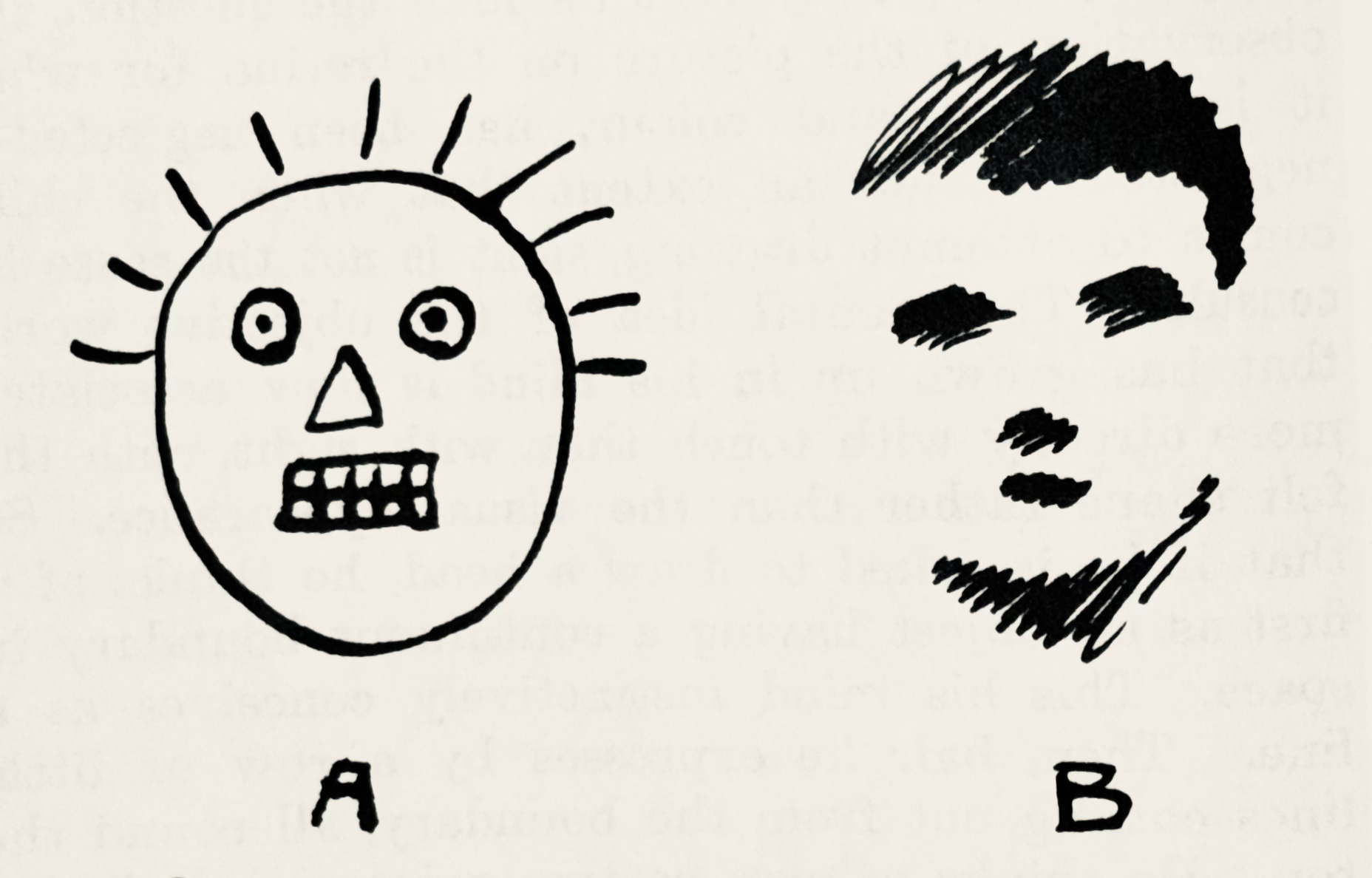
Image from the book The Practice & Science of Drawing by Harold Speed
As artists develop, they must move beyond this tactile understanding and learn to see purely through visual observation. Instead of relying on what they think they know, they must train themselves to observe the shapes formed by light on the retina.
This is similar to how a Camera obscura works—an invention inspired by the way our eyes capture images. Light bounces off objects and projects onto our retina, creating patterns of shapes, values, and edges that allow us to distinguish form.
To draw more accurately, we must focus on these visual elements: masses, shadows, and relationships of light and dark. By doing so, we create the illusion of reality—not by drawing what we know, but by drawing what we truly see.
Tom Bernardes